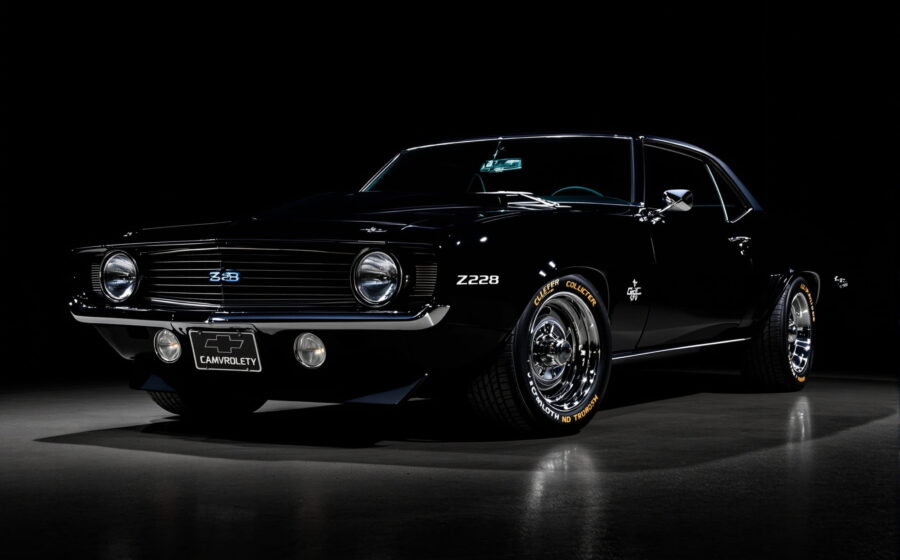
Few automobiles capture the raw spirit of the muscle car era quite like the 1969 Camaro Z/28. With its high-revving 302 V8 and race-bred suspension, this iconic vehicle was built to dominate both the street and the track. Chevrolet created something truly extraordinary when they introduced the Z/28 performance package. Originally designed to compete in the Sports Car Club of America (SCCA) Trans-Am series, that competitive racing DNA seeped into every bolt and panel of the production model.
Today, classic car enthusiasts and collectors still view the ’69 Z/28 as a masterpiece of American engineering. This article explores the mechanical brilliance, aggressive styling, and enduring cultural legacy of the 1969 Camaro Z/28. You will discover exactly why this specific model continues to stand at the pinnacle of automotive history and commands such immense respect on the road.
Engineering the Legend: The High-Revving 302 V8
At the heart of the Z/28’s appeal is its unique powerplant. Chevrolet engineers needed an engine that met the SCCA’s strict displacement limit of 305 cubic inches. To achieve this, they cleverly combined a 327-cubic-inch engine block with the short-stroke crankshaft from a 283-cubic-inch V8. The result was the legendary 302 cubic-inch V8 engine.
This engine thrived at high RPMs. While traditional muscle cars relied on massive big-block V8s for low-end torque, the 302 was designed to scream down straightaways and pull aggressively out of tight corners. Chevrolet officially rated the engine at a modest 290 horsepower. However, this number was widely known to be a deliberate understatement intended to appease strict automotive insurance companies. In reality, a well-tuned 302 easily produced closer to 400 horsepower when pushed toward its 7,000 RPM redline.
A forged steel crankshaft, high-compression pistons, and a massive Holley four-barrel carburetor ensured the engine breathed deeply and reliably. Paired exclusively with a Muncie four-speed manual transmission, the 302 demanded driver engagement, rewarding skilled shifts with blistering acceleration and an unforgettable exhaust note.
Race-Bred Performance: Suspension and Handling
Classic American muscle cars are frequently stereotyped as heavy machines that excel only in a straight line. The 1969 Camaro Z/28 completely shattered that assumption. Because it was fundamentally a homologation special—a road car built to satisfy racing entry requirements—it featured a highly sophisticated suspension setup for its time.
Chevrolet outfitted the Z/28 with heavy-duty front coil springs and multi-leaf rear springs. Upgraded shock absorbers kept the tires firmly planted on uneven pavement. Quick-ratio steering allowed drivers to make rapid, precise adjustments during high-speed cornering. Power-assisted front disc brakes came standard, providing the crucial stopping power necessary for a car capable of such high speeds.
This combination of a lightweight, high-revving engine and a stiffened suspension resulted in a remarkably balanced automobile. The Z/28 could carve through winding mountain roads with a level of agility that left larger, heavier competitors struggling to keep up.
The Distinctive Design of the 1969 Model
The 1969 model year brought significant aesthetic updates to the Camaro lineup, resulting in a wider, lower, and more aggressive stance. Chevrolet redesigned the sheet metal entirely, giving the car heavily sculpted fenders and a distinctive V-shaped front grille. Deeply inset headlights added a menacing look to the front fascia.
For the Z/28, visual cues signaled its performance capabilities to anyone paying attention. Wide racing stripes ran prominently across the hood and rear decklid. A functional cowl-induction hood scoop fed cold, dense air directly into the air cleaner, further boosting engine performance. Front and rear spoilers improved aerodynamics at high speeds while enhancing the car’s muscular profile.
Sitting on 15-inch Rally wheels wrapped in raised white-letter tires, the ’69 Z/28 looked fast even when parked in a driveway.
An Enduring Legacy
The 1969 Camaro Z/28 secured its place in history through undeniable success on the racetrack. Driven by legends like Mark Donohue for Roger Penske’s racing team, the Camaro dominated the Trans-Am series, winning the championship in 1968 and 1969. That racing pedigree gave the street car an aura of authenticity that competitors simply could not match.
Beyond its racing trophies, the 1969 Z/28 represents the absolute peak of the first-generation Camaro. The following year would bring a complete redesign, and soon after, changing emissions regulations and the fuel crisis would severely strangle the performance of American V8s. The ’69 Z/28 stands perfectly positioned right before the decline of the golden era of muscle cars.
The Crown Jewel of American Muscle
The 1969 Camaro Z/28 delivers an unfiltered, mechanical driving experience that modern vehicles struggle to replicate. From the heavy clutch pedal to the metallic mechanical chatter of the solid-lifter 302 V8, every drive is an event. It perfectly balances aggressive aesthetics with genuine track-ready performance.
If you ever have the opportunity to attend a classic car show or historic racing event, keep an eye out for those distinctive rally stripes. Listen closely for the aggressive, high-RPM idle of the 302 engine. You will quickly understand exactly why this remarkable machine remains the undisputed king of the muscle car era.